In the modern dairy industry, not all businesses require large industrial setups to start milk processing. Many small entrepreneurs, dairy farmers, and cooperatives prefer compact and cost-effective systems that can handle limited but consistent milk production. For such needs, the mini dairy plant (200 to 500 LPH) is an ideal solution that supports small-scale milk processing with efficiency, hygiene, and affordability.
A mini dairy plant with a capacity of 200 to 500 liters per hour (LPH) is a small-scale milk processing unit designed to handle raw milk, process it, and convert it into safe and consumable dairy products. It is widely used in small dairy farms, rural milk collection centers, local dairy businesses, and startups that aim to enter the dairy industry with limited investment.
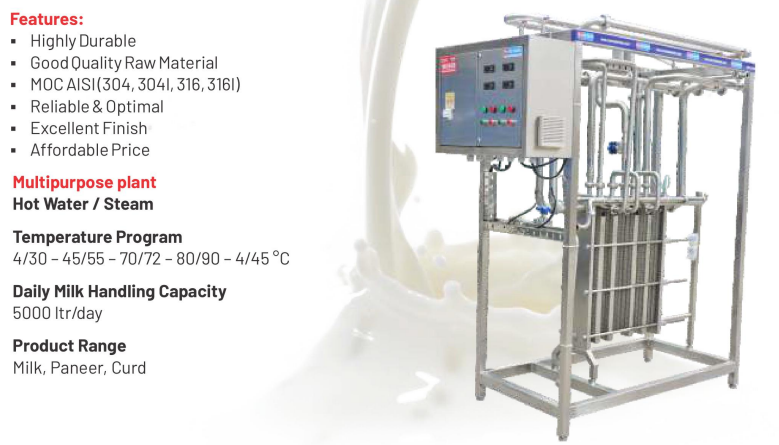
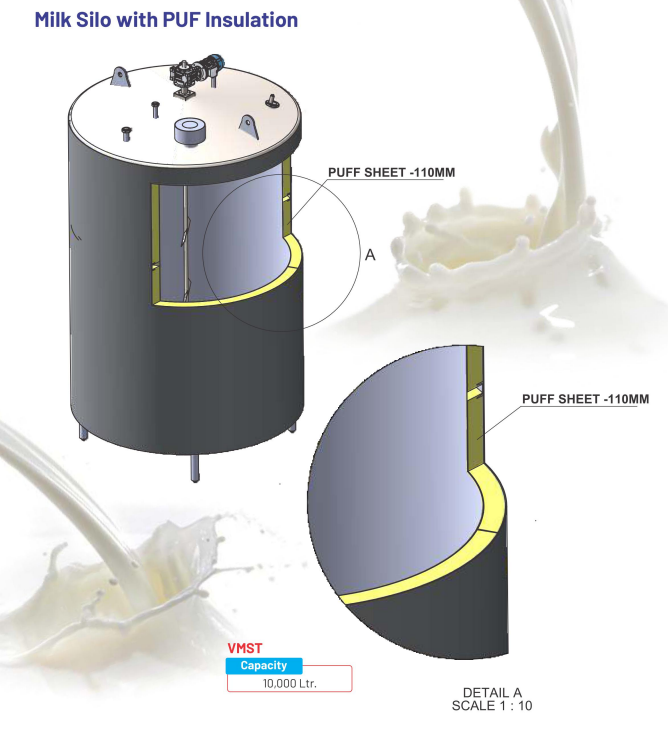
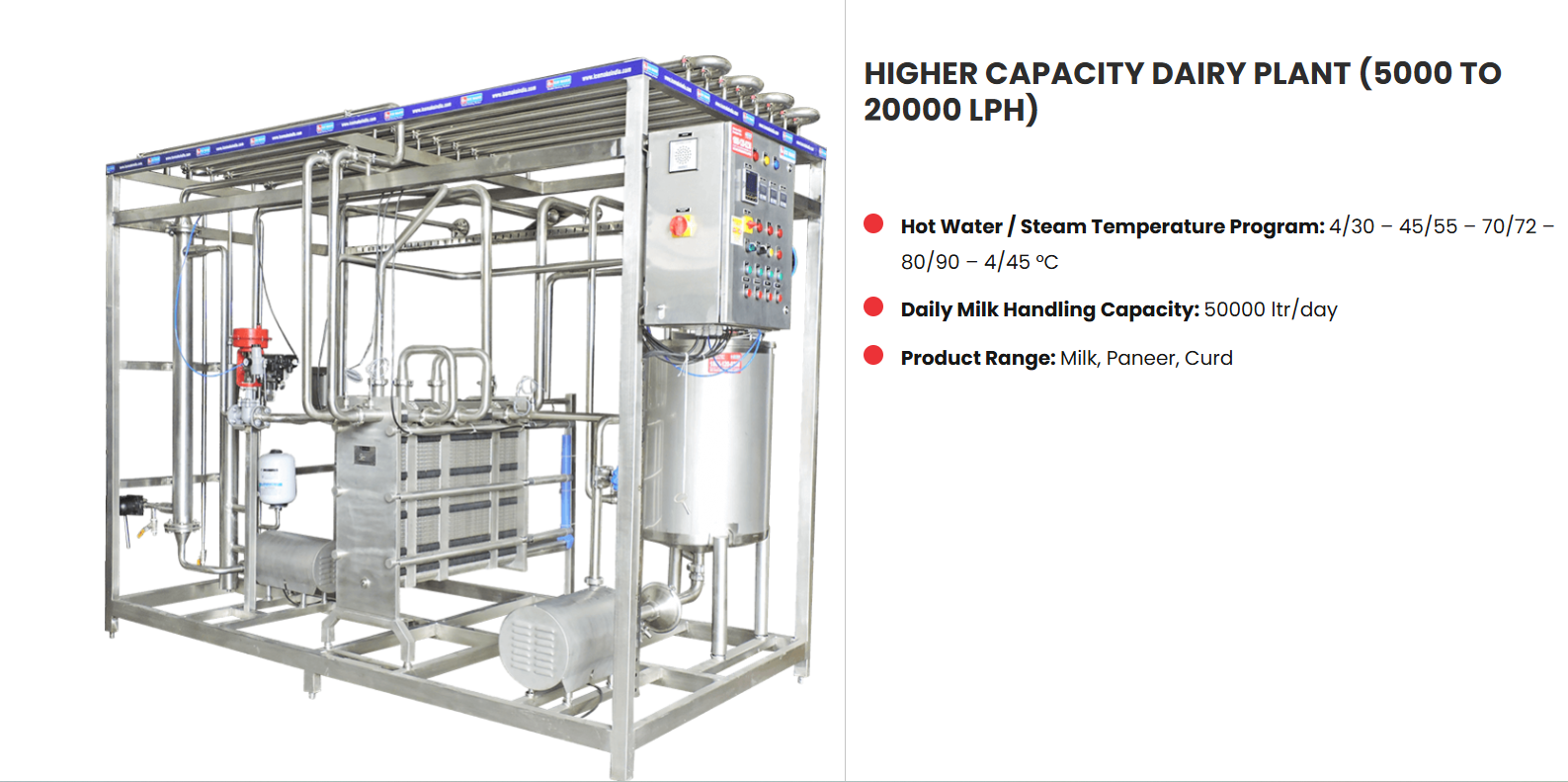
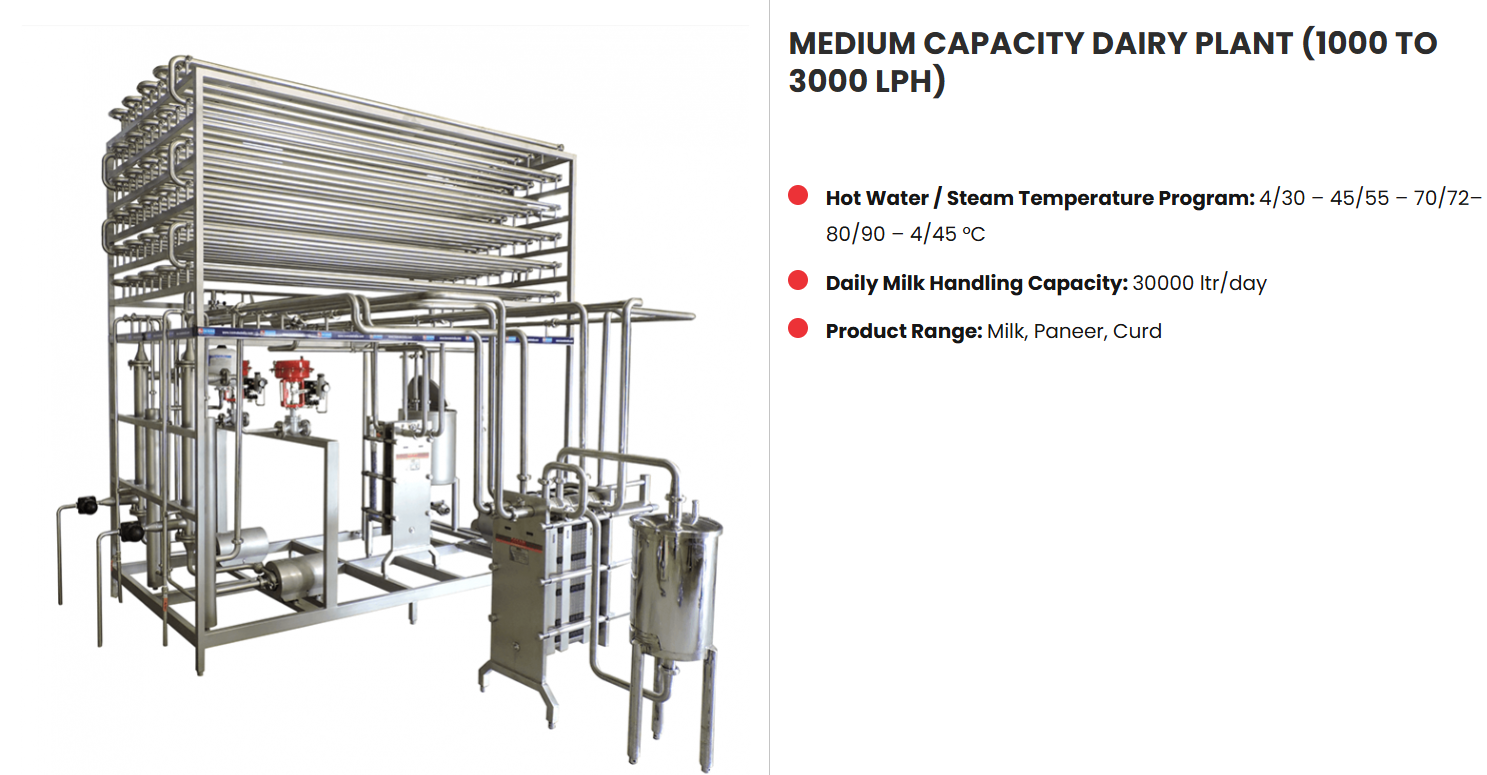
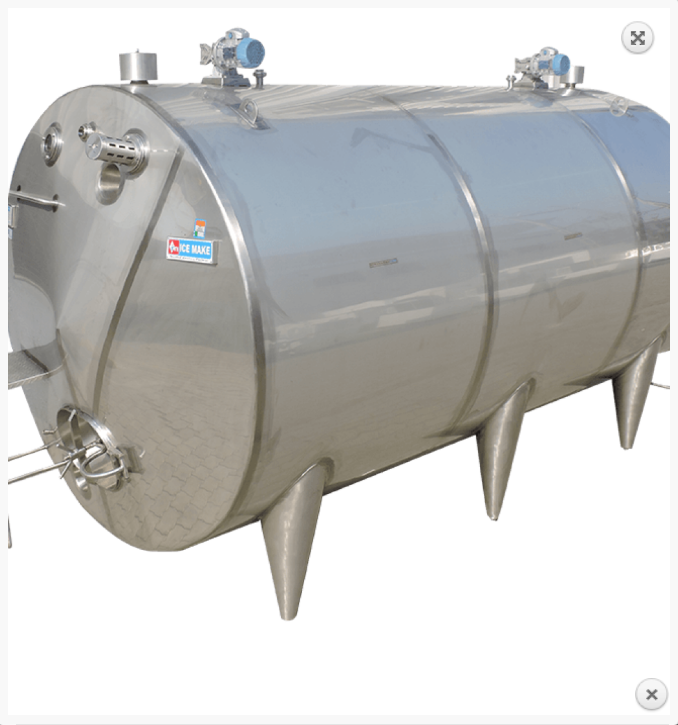
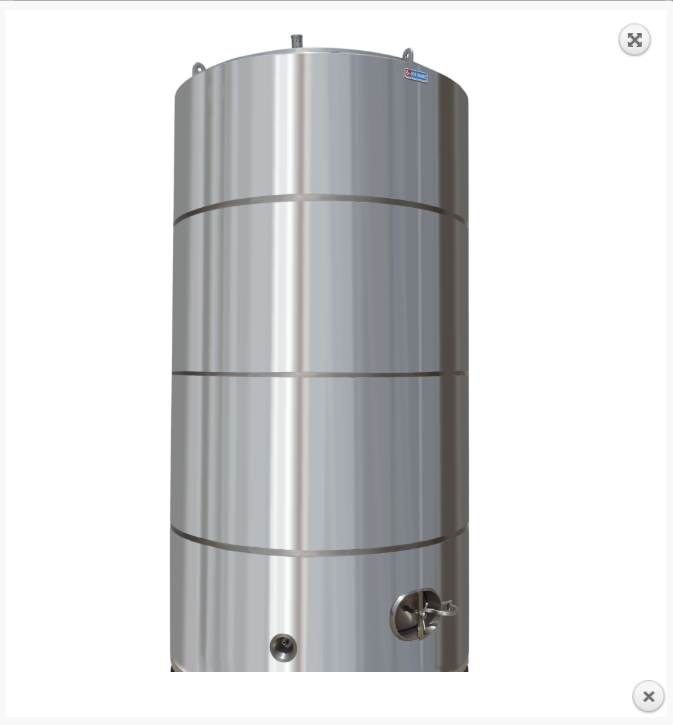
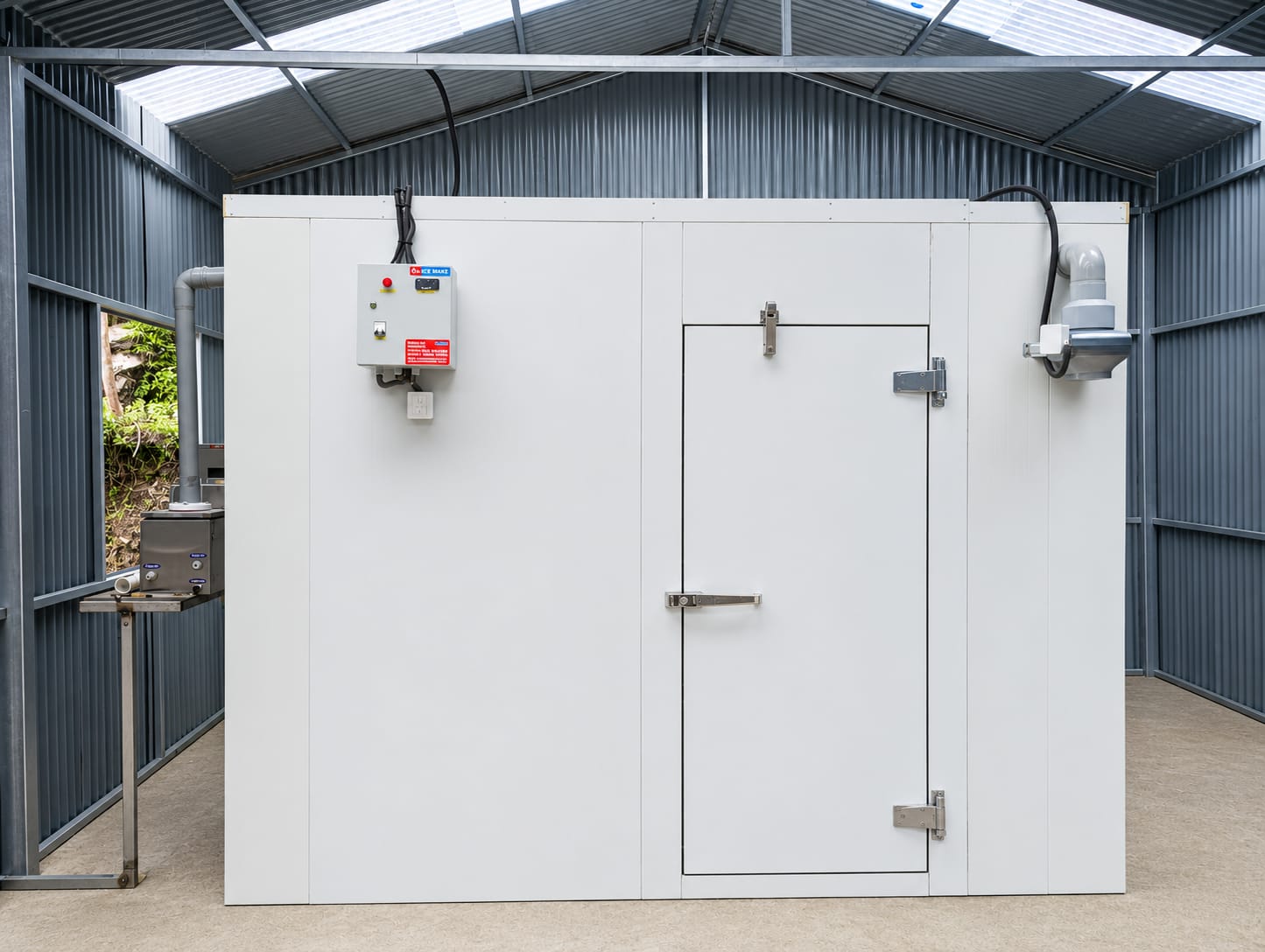
This type of plant typically includes essential components such as a milk reception unit, storage tank, filtration system, pasteurizer, milk chiller, and sometimes a small packaging unit. All these units work together in a simple flow to ensure that raw milk is properly processed, cooled, and made safe for consumption while maintaining its nutritional value and freshness.
The working process of a mini dairy plant begins with the collection of raw milk, which is first tested for quality parameters such as fat content, temperature, and cleanliness. After testing, the milk is transferred into a storage tank where it is cooled to prevent spoilage. It is then passed through a pasteurization unit, where it is heated to a specific temperature and rapidly cooled to kill harmful bacteria while preserving taste and nutrients. After pasteurization, the milk is ready for packaging or direct distribution.
One of the main advantages of a mini dairy plant is its low investment cost and easy operation. It is highly suitable for small-scale entrepreneurs who want to start a dairy business without large capital requirements. The system is compact, easy to install, and does not require highly skilled operators, making it practical for rural and semi-urban areas.
Another advantage is flexibility. A mini dairy plant can be used to produce pasteurized milk and sometimes basic dairy products depending on the setup. It allows farmers and small businesses to add value to raw milk instead of selling it directly, which increases profit margins and reduces dependency on middlemen.
However, mini dairy plants also have limitations. Due to their small capacity, they are not suitable for large-scale production or industrial supply chains. Regular maintenance and proper hygiene management are still important to ensure product safety and consistent quality.
In Nepal, the dairy sector is growing rapidly, especially in rural and semi-urban regions, and companies like RM Agrotech Pvt. Ltd. are supporting this growth by providing reliable mini dairy plant solutions. The company offers equipment supply, installation, technical support, and maintenance services, helping small dairy entrepreneurs start and operate their businesses efficiently.
In conclusion, a mini dairy plant (200 to 500 LPH) is a practical and cost-effective solution for small-scale dairy processing. It helps farmers and entrepreneurs add value to milk, improve income, and contribute to local dairy development. With proper support from experienced providers like RM Agrotech Pvt. Ltd., small dairy businesses can successfully grow and participate in the expanding dairy industry.